This report examines BC Timber Sales operations and timber sale licence holders in the Merritt Field Unit, within the Cascades Natural Resource District. The audit found that most forestry and wildfire practices met legal requirements, and that BCTS managed road and bridge risks well after the November 2021 atmospheric river. However, the Board identified concerns with some free-growing declarations, including decisions based on outdated survey information or made while forest health concerns were present.
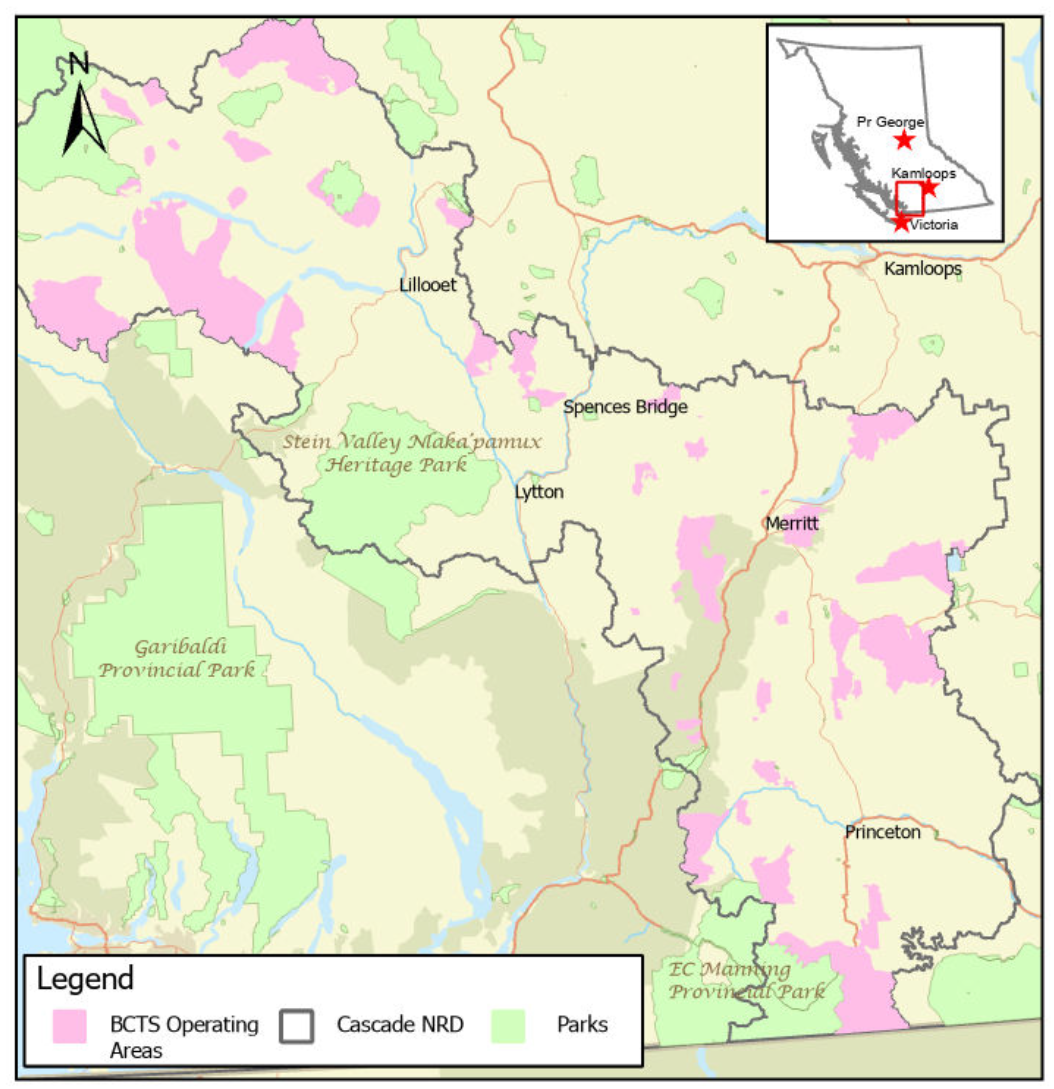
Map of the area subject to audit.
The Board audited activities carried out between July 1, 2024, and July 25, 2025. The audit examined whether BCTS and timber sale licence holders complied with legal requirements for:
Auditee: BC Timber Sales
Timber sale licences:
The Board is concerned about some practices, despite general compliance
As part of its annual audit program, the Board conducted a full-scope compliance audit of BC Timber Sales (BCTS) activities in the BCTS Merritt Field Unit. Although this audit found that BCTS and timber sale licence holders complied with most requirements under the Forest and Range Practices Act (FRPA) and Wildfire Act, the Board is concerned about some of the practices it observed.
Wildlife tree retention fell short of the site plan target
In one instance, mature trees that were intended to be left standing in a wildlife tree retention area were cut. For reasons described in the report, this was not determined to be a non-compliance. Nevertheless, during development of the cutblock plans and prescriptions, a forest professional determined the area supported values that should be retained until the regenerating crop matures. A combination of poor communication and oversight resulted in retention falling short of the site plan target for the cutblock. This is not consistent with effective forest management.
Free-growing declarations must be based on current, accurate information
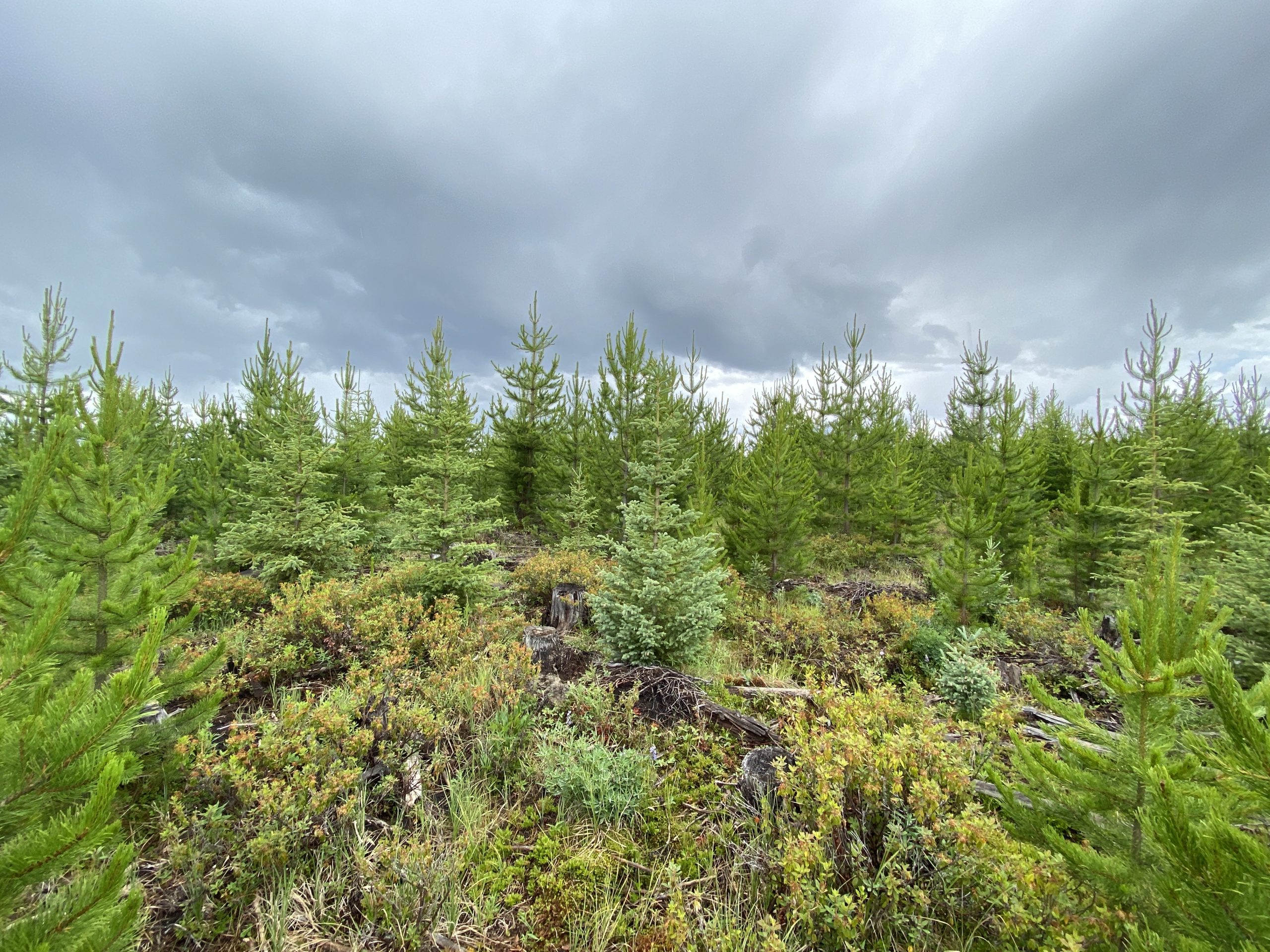
The Board is also concerned with silviculture practices relating to free-growing declarations. In one case, BCTS declared a young stand free growing even though it was known to be heavily infested with western spruce budworm, a defoliator that can cause tree mortality. The declaration was made at an early stage, when there was a low likelihood that the stand would remain acceptably healthy through the free-growing period. In addition, for three different cutblocks, BCTS made free-growing declarations that were largely based on outdated survey data that could not be considered current, as required by legislation and defined in provincial survey guidance.
Accurate silviculture and forest cover data submitted alongside free-growing declarations is used to help prioritize incremental management of post-free-growing stands. The public interest is best served when free-growing declarations, which signal the end of basic silviculture obligations, are based on current, accurate data and when insect and disease incidence are accurately depicted.
BCTS managed post-storm road and bridge risks well
The Board commends BCTS for its work in the aftermath of the November 2021 atmospheric river. This event impacted the road and bridge infrastructure in the Cascades Natural Resource District, including BCTS assets, forest service roads and public highways. This audit found that BCTS did a good job of managing risks to road users and forest resources through a combination of repairs, temporary closures and permanent closures.
_______________
BCTS operations throughout the district are within the territories of 71 First Nations. These Nations have been stewards of this land since time immemorial, and the Forest Practices Board acknowledges their deep connection with the land that continues to this day.
_______________
For interview requests or additional information, contact:
Tanner Senko, Communications Manager
Email: tanner.senko@bcfpb.ca
Phone: 250-889-8211