On this page:
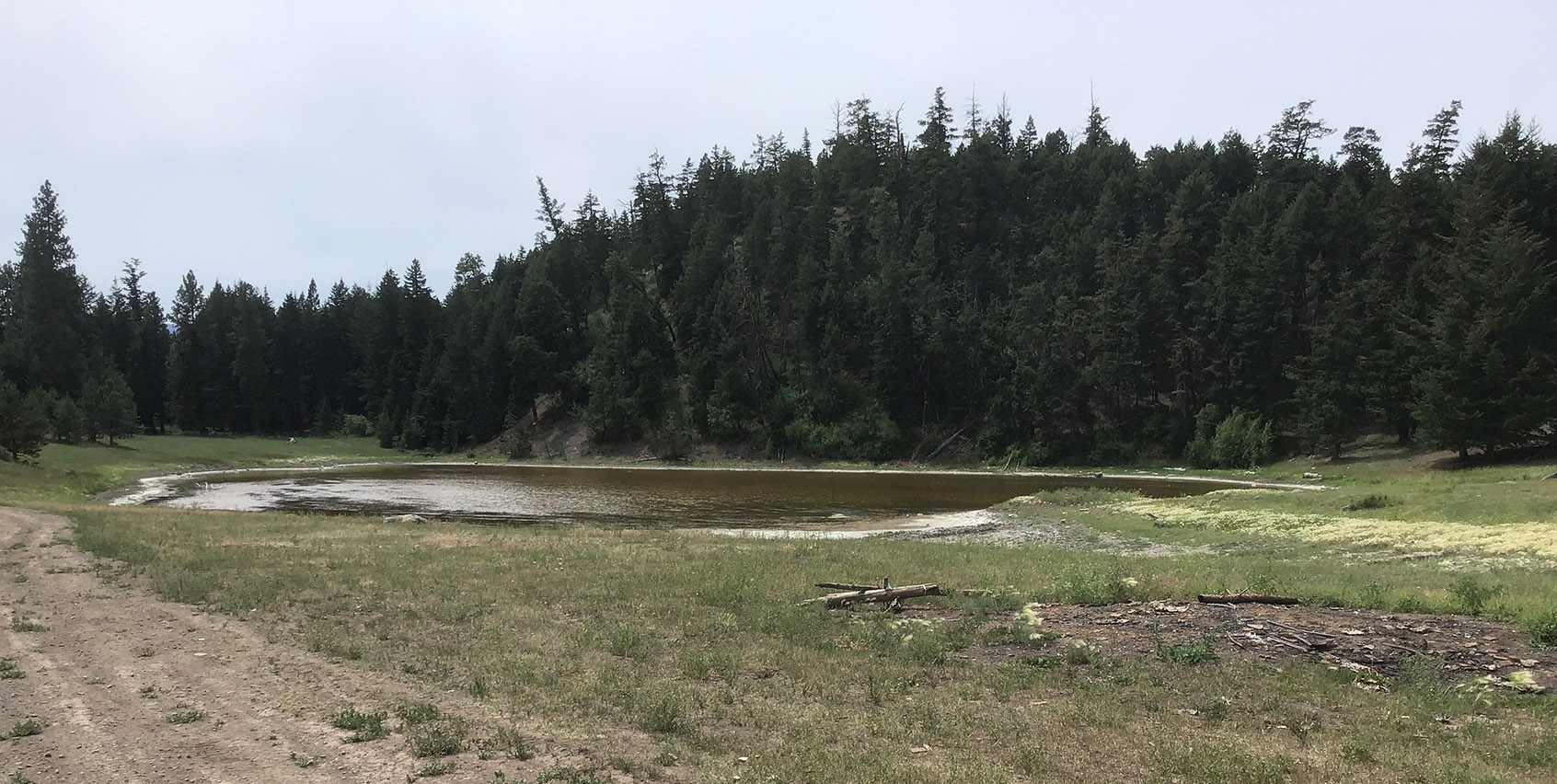
In 2023, the Board received a complaint from two range agreement holders about livestock grazing impacts, fence maintenance and following a grazing schedule in the Mine pasture within the Coutlee Range Unit near Merritt, British Columbia. The complainants, together with four other agreement holders, were authorized to graze livestock on the same range.
As part of its investigation, the Board assessed the condition of the range resources to determine whether the agreement holders met legal requirements under the Forest and Range Practices Act.
The Board considered whether the six range agreement holders complied with legal requirements for:
| Range Agreement Holders: | |
|
|
Government: Ministry of Forests (Cascades Natural Resource District)
Based on these findings, the Board offers the following commentary.
Context and Background
The Board notes that the Ministry of Forests has known about the poor condition of the Mine pasture and the broader range agreement area since 2009.
A 2009 ministry-commissioned forage supply review recommended reducing authorized grazing by more than half, estimating it would take 50 years for the pasture to recover.
Despite some current and planned actions, the authorized forage amount is still more than double what was recommended in the forage supply review.
Board’s Assessment
The Board believes that non-compliances by the range agreement holders and the ministry’s over-allocation of forage are hindering the achievement of government objectives for the range resource.
The Board urges range agreement holders and the ministry to take the necessary steps to ensure proper stewardship of the range resource, consistent with government’s objectives.
The Board acknowledges that actions by the ministry and range users in 2024 and 2025, and planned for future years, represent positive steps in the recovery of the Mine pasture.
Structural Challenges Observed
This investigation illustrates the coordination challenges that can arise when multiple range agreement holders operate under a single range use plan.
Effective implementation depends on timely cooperation among all agreement holders, which can be difficult to achieve when responsibilities are shared and decisions must be aligned.
Recurring Theme in Board’s Work
The Board has repeatedly noted in its range-related investigations and audits that requirements in range use plans are often not measurable and thus not verifiable or enforceable.
This is not appropriate in light of the many resource values that are found on BC’s rangelands.
Related: The Board’s special report Measuring and Allocating Forage on Rangelands in BC discusses the relationship between forage allocation and achievement of government’s objectives for range.
Enforceable planning requirements support effective oversight. When range use plan requirements are not measurable or verifiable, it becomes difficult to assess whether actions are being carried out and whether they are achieving intended outcomes. This undermines effective stewardship.
Shared tenure arrangements require coordination. Coordinating decisions and actions among six agreement holders operating under a single range use plan can be difficult when responding to declining range conditions. This can delay corrective actions being taken in a timely manner.
Upland degradation affects multiple resource values. When upland grasslands and open forest areas are not functioning, soil stability, water infiltration capacity, and forage productivity are all impacted over time.
Recovery requires sustained effort. Restoring upland function in degraded rangelands takes time and continued attention, even after changes to management practices are implemented.
_______________
The range agreement area that is subject to the complaint is in the southern part of the Coutlee Range Unit. It borders the Coldwater Indian Reserve to the south and east. The range agreement area is within the territories of 21 First Nations and the Forest Practices Board recognizes their deep connection with the land and the importance of maintaining healthy, functioning rangelands for present and future generations.
_______________
Media & Contact
For interview requests or additional information, contact:
Tanner Senko, Communications Manager
Email: tanner.senko@bcfpb.ca
Phone: 250-889-8211